Welcome to DU!
The truly grassroots left-of-center political community where regular people, not algorithms, drive the discussions and set the standards.
Join the community:
Create a free account
Support DU (and get rid of ads!):
Become a Star Member
Latest Breaking News
Editorials & Other Articles
General Discussion
The DU Lounge
All Forums
Issue Forums
Culture Forums
Alliance Forums
Region Forums
Support Forums
Help & Search
General Discussion
In reply to the discussion: The History of Skulls in Tattooing: A Symbol of Life, Death, and Everything In Between [View all]
Celerity
(55,075 posts)11. No it is not, that's a false claim. The Totenkopf was used in the German military almost 200 years before the Nazis.
https://en.wikipedia.org/wiki/Totenkopf
German military
Prussia
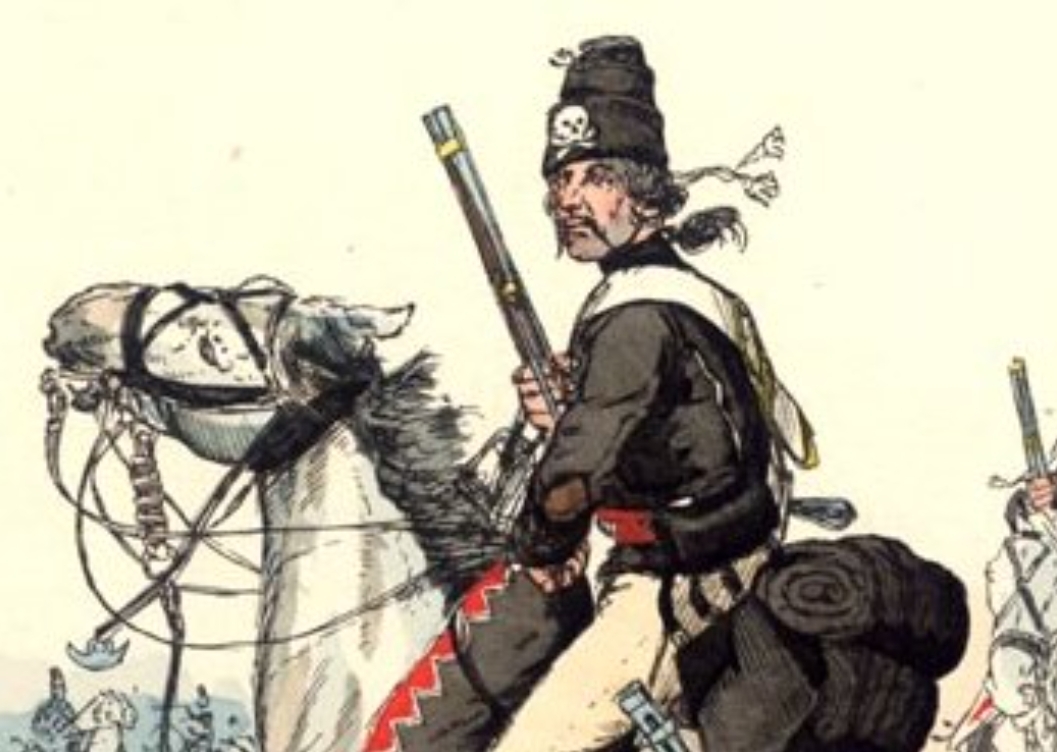
Hussar from Husaren-Regiment Nr. 5 (von Ruesch) in 1744 with the Totenkopf on the mirliton (Ger. Flügelmütze)
Use of the Totenkopf in Germany as a military emblem began under Frederick the Great, who formed a regiment of Hussar cavalry in the Prussian army commanded by Colonel von Ruesch, the Husaren-Regiment Nr. 5 (von Ruesch). It adopted a black uniform with a Totenkopf emblazoned on the front of its mirlitons and wore it on the field in the War of Austrian Succession and in the Seven Years' War.[6] The Totenkopf remained a part of the uniform when the regiment was reformed into Leib-Husaren Regiments Nr.1 and Nr.2 in 1808. The symbol was then granted 3 years later to the Spanish Army’s 8th Light Cavalry Regiment “Lusitania”, who were nicknamed “Los Dragones de la Muerte” (the Dragons of Death) and were granted use of the skull after the infamous Battle of Madonna dell'Olmo in 1744, where they suffered great casualties.

Totenkopf badge worn by the Brunswick Leibbataillon ( "Life-Guard Battalion" ) at the Battle of Waterloo in 1815
Brunswick
In 1809, during the War of the Fifth Coalition, Frederick William, Duke of Brunswick-Wolfenbüttel raised a force of volunteers to fight Napoleon Bonaparte, who had conquered the Duke's lands. The Brunswick Corps was provided with black uniforms, giving rise to their nickname, the Black Brunswickers. Both hussar cavalry and infantry in the force wore a Totenkopf badge, either in mourning for the duke's father, Charles William Ferdinand, Duke of Brunswick-Wolfenbüttel, who had been killed at the Battle of Jena–Auerstedt in 1806, or according to some sources, as a sign of revenge against the French. After fighting their way through Germany, the Black Brunswickers entered British service and fought with them in the Peninsular War and at the Battle of Waterloo. The Brunswick corps was eventually incorporated into the Prussian Army in 1866.

German Empire era Totenkopf
German Empire
The skull continued to be used by the Prussian and Brunswick armed forces until 1918, and some of the stormtroopers that led the last German offensives on the Western Front in 1918 used skull badges. Luftstreitkräfte fighter pilots Georg von Hantelmann and Kurt Adolf Monnington are just two of a number of Central Powers military pilots who used the Totenkopf as their personal aircraft insignia.
Weimar Republic
The Totenkopf was used in Germany throughout the interwar period, most prominently by the Freikorps. In 1933, it was in use by the regimental staff and the 1st, 5th, and 11th squadrons of the Reichswehr's 5th Cavalry Regiment as a continuation of a tradition from the Kaiserreich.
snip
German military
Prussia
Hussar from Husaren-Regiment Nr. 5 (von Ruesch) in 1744 with the Totenkopf on the mirliton (Ger. Flügelmütze)
Use of the Totenkopf in Germany as a military emblem began under Frederick the Great, who formed a regiment of Hussar cavalry in the Prussian army commanded by Colonel von Ruesch, the Husaren-Regiment Nr. 5 (von Ruesch). It adopted a black uniform with a Totenkopf emblazoned on the front of its mirlitons and wore it on the field in the War of Austrian Succession and in the Seven Years' War.[6] The Totenkopf remained a part of the uniform when the regiment was reformed into Leib-Husaren Regiments Nr.1 and Nr.2 in 1808. The symbol was then granted 3 years later to the Spanish Army’s 8th Light Cavalry Regiment “Lusitania”, who were nicknamed “Los Dragones de la Muerte” (the Dragons of Death) and were granted use of the skull after the infamous Battle of Madonna dell'Olmo in 1744, where they suffered great casualties.
Totenkopf badge worn by the Brunswick Leibbataillon ( "Life-Guard Battalion" ) at the Battle of Waterloo in 1815
Brunswick
In 1809, during the War of the Fifth Coalition, Frederick William, Duke of Brunswick-Wolfenbüttel raised a force of volunteers to fight Napoleon Bonaparte, who had conquered the Duke's lands. The Brunswick Corps was provided with black uniforms, giving rise to their nickname, the Black Brunswickers. Both hussar cavalry and infantry in the force wore a Totenkopf badge, either in mourning for the duke's father, Charles William Ferdinand, Duke of Brunswick-Wolfenbüttel, who had been killed at the Battle of Jena–Auerstedt in 1806, or according to some sources, as a sign of revenge against the French. After fighting their way through Germany, the Black Brunswickers entered British service and fought with them in the Peninsular War and at the Battle of Waterloo. The Brunswick corps was eventually incorporated into the Prussian Army in 1866.
German Empire era Totenkopf
German Empire
The skull continued to be used by the Prussian and Brunswick armed forces until 1918, and some of the stormtroopers that led the last German offensives on the Western Front in 1918 used skull badges. Luftstreitkräfte fighter pilots Georg von Hantelmann and Kurt Adolf Monnington are just two of a number of Central Powers military pilots who used the Totenkopf as their personal aircraft insignia.
Weimar Republic
The Totenkopf was used in Germany throughout the interwar period, most prominently by the Freikorps. In 1933, it was in use by the regimental staff and the 1st, 5th, and 11th squadrons of the Reichswehr's 5th Cavalry Regiment as a continuation of a tradition from the Kaiserreich.
snip
Edit history
Please sign in to view edit histories.
Recommendations
4 members have recommended this reply (displayed in chronological order):
27 replies
 = new reply since forum marked as read
Highlight:
NoneDon't highlight anything
5 newestHighlight 5 most recent replies
RecommendedHighlight replies with 5 or more recommendations
= new reply since forum marked as read
Highlight:
NoneDon't highlight anything
5 newestHighlight 5 most recent replies
RecommendedHighlight replies with 5 or more recommendations
= new reply since forum marked as read
Highlight:
NoneDon't highlight anything
5 newestHighlight 5 most recent replies
RecommendedHighlight replies with 5 or more recommendations
The History of Skulls in Tattooing: A Symbol of Life, Death, and Everything In Between [View all]
Uncle Joe
Sunday
OP
No it is not, that's a false claim. The Totenkopf was used in the German military almost 200 years before the Nazis.
Celerity
Sunday
#11