.
Image of the Day for
June 17, 2026
Drought and water releases drained the Arizona reservoir to levels that have led to widespread fish deaths.
June 7, 2023
 May 22nd, 2026
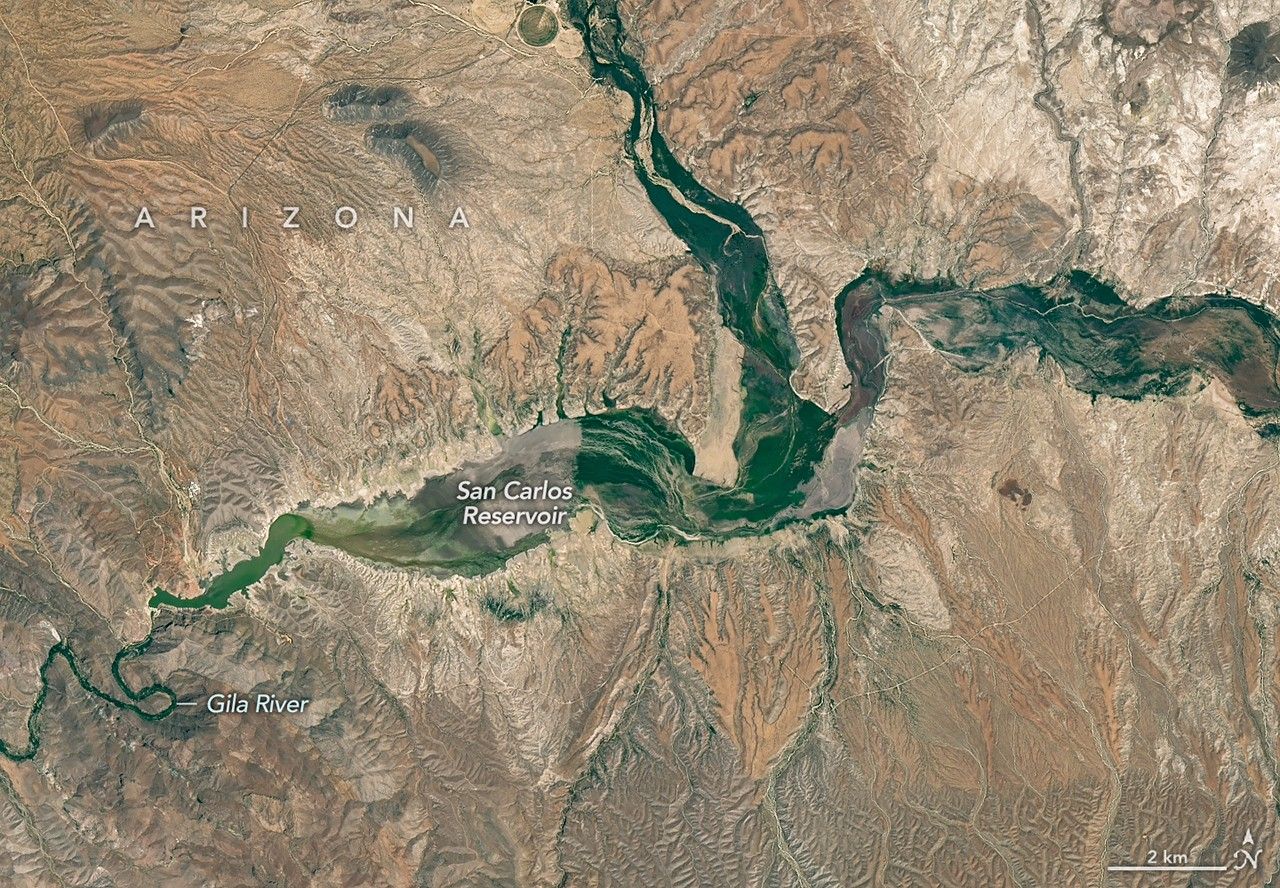
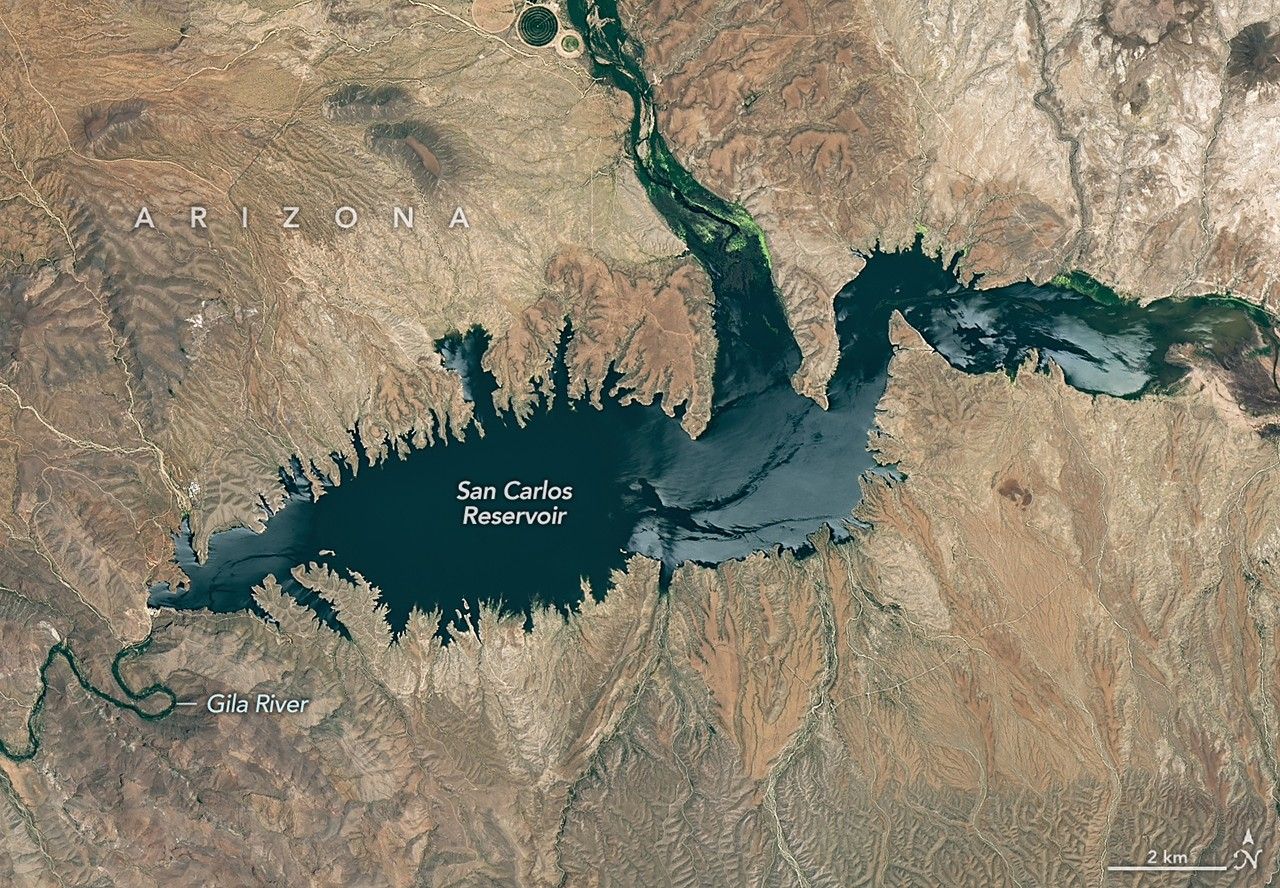
Little water remains in the San Carlos Reservoir in May 2026 (bottom) compared to fuller conditions in June 2023 (top). Images were captured by the
OLI (Operational Land Imager) on the
Landsat 9 and 8 satellites, respectively. NASA Earth Observatory images by Michala Garrison.
The
Gila River is among the Southwest's most important rivers, delivering water for people, farms, and wildlife while linking the snow-fed mountains of southwestern New Mexico to the desert lowlands of southwestern Arizona.
In wetter years, seasonal snowfall on the Mogollon Mountains and Black Range provides much of the river's spring flow and helps refill San Carlos Reservoir, which is formed by the
Coolidge Dam. When filled to capacity, the reservoir is one of Arizona's largest bodies of water.
However, in 2026, lackluster snowfall left the mountain snowpack in the Gila River watershed at
2 percent of the 1991-2020 March median. The limited snowpack pushed April streamflow to
39 percent of normal. By June, after mandatory water releases for downstream agriculture, the reservoir held less than
400 acre-feet of water.
The Landsat image above (right) shows the near-empty reservoir on May 22, 2026, when it stored 389 acre-feet of water—less than 1 percent full; the other image (left) shows the same area in June 2023, when it was about 60 percent full. The green vegetation growing along the river channel and reservoir edge includes a mixture of tamarisk, willow, cottonwood, sedges, and grasses.
Officials
closed the reservoir indefinitely on June 5, 2026, after the declining water levels contributed to low oxygen levels—
hypoxia—that killed virtually all of its fish. Species living in the reservoir included largemouth bass, black crappie, bluegill, channel catfish, flathead catfish, and several stocked species, including brown trout and rainbow trout. The decomposing fish may pose health risks to people attempting to boat or fish, the San Carlos Recreation and Wildlife Department warned.
The reservoir has hit similarly low water levels in the past, running out of water at least 20 times since it was filled in 1930, according to
news reports. Even when the dam and reservoir were first dedicated, there was enough grass growing on the dried reservoir bottom that humorist Will Rogers
famously quipped to President Calvin Coolidge: "If that was my lake, I'd mow it."
Other years with major fish kills include 1976 and 2018. After more than 5 million fish died during a similar event in 1976, the
Gila Herald reported that it took five years for the lake's ecosystem to rebound.
The region is currently in the midst of a multi-year dry period that has left much of the Gila River's headwaters in New Mexico in a state of
severe drought,
according to data from the U.S. Drought Monitor.
However, the river's flow is highly variable, and heavy rains during the coming wet season could help the reservoir recover. A
seasonal monsoon outlook released by NOAA in May 2026 projected a 33 to 50 percent chance that an above-average amount of rain would fall in the region that summer.
El Niño in the central and eastern equatorial Pacific, which was
strengthening in late spring 2026, can make heavy rains in the U.S. Southwest more likely.
NASA Earth Observatory images by Michala Garrison, using Landsat data from the U.S. Geological Survey. Story by Adam Voiland.
 = new reply since forum marked as read