Environment & Energy
Related: About this forumHi-Ho, Another Wastewater Geyser In New Mexico Blows Fracking Toxins Into The Air
At first, he thought it was smoke. Jackie Onsurez was driving the bustling New Mexico highway between his home in Loving and nearby Carlsbad last Tuesday evening when he thought the smoke didn’t look right. As he pulled closer, he saw that the 70-foot plume was actually a roaring geyser of toxic oilfield wastewater, commonly called produced water, spewing from a pipe at a site operated by NGL Energy Partners. Onsurez, who until recently was running for the state’s lieutenant governor position, said he called NGL, 911, the New Mexico Environment Department and others. He was at the site for a few minutes when an oilfield roughneck arrived in a pickup truck and tried to stop the spraying water but couldn’t.
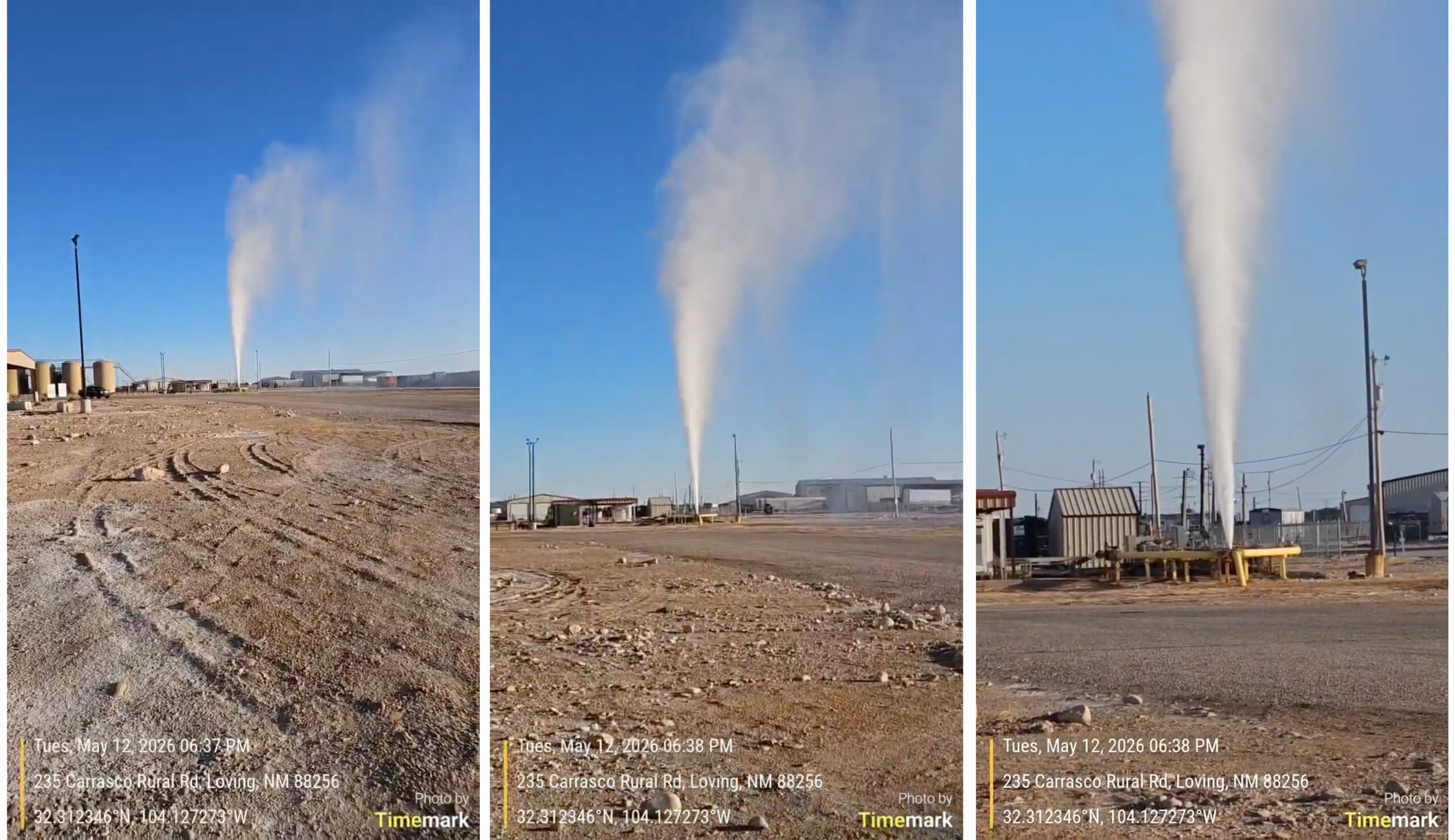 ?quality=75&strip=all&w=1536
EDIT
In the greater scheme of wastewater spills in New Mexico, NGL’s accident was notable for being visible, not for being big. Between Jan. 1 and May 19, 48 companies reported 356 spills, losing 15,335 barrels of wastewater across the state. The biggest was a 2,000-barrel spill in January by Hilcorp Energy Company, just 1,300 feet from a neighborhood in north Farmington. Devon Energy Corporation reported the most wastewater spills so far with 93, compared to three for NGL.
But last week’s briny geyser highlights one of the fastest-growing controversies in New Mexico’s oil and gas industry: what to do with produced water. In 2025, oil producers brought up more than 800 million barrels of oil and 2.7 billion barrels of wastewater in the state. Those barrels of wastewater increase as oil and gas production grows, and the total has doubled since 2020. There is little agreement on what to do with all of it.
The water occurs naturally in oil and gas formations and is highly saline, laced with petroleum-based chemicals. It is often radioactive and can include the chemical cocktails that companies inject into wells during the fracking and production processes. The recipes for those cocktails are often protected trade secrets and can differ radically from well to well. Basically, the water is toxic, and its use outside the oilfield for anything but testing is forbidden in New Mexico.
EDIT
https://grist.org/energy/70-foot-wastewater-geyser-reflects-new-mexicos-latest-oilfield-challenge/
 = new reply since forum marked as read
Highlight:
NoneDon't highlight anything
5 newestHighlight 5 most recent replies
= new reply since forum marked as read
Highlight:
NoneDon't highlight anything
5 newestHighlight 5 most recent replies

Scalded Nun
(1,736 posts)Then they will live outside of this country.
debsy
(1,060 posts)It is not dissimilar to the strength of the aroma when driving through cattle loading stations in Texas and elsewhere. It smells awful.

Bo Zarts
(26,457 posts)In January 2023, I got caught up in a big traffic jam on a back highway (TX/NM 128) into tiny Jal, New Mexico, from Odessa, Texas. It was a stationary line of dozens of trucks hauling fracking material from Texas to the oilfields near Jal.

This is war-for-oil country, which I never understood. Seems like liberating foreign oil would depress the market for domestic product. But what do I know? This "B-52" is just north of Jal on NM-18.

SE New Mexico near Artesia.

By a roadside picnic area near Loco Hills, NM.

Bo Zarts in the oil patch for a photo op.