Secure Boot As Anti-Competitive Behavior
When I first installed Linux on my then-new computer last year to replace an old Linux pre-made laptop, I learned about Ventoy, which is a USB tool that allows ISOs to run on EFI hardware and multiple files to be added. I downloaded the ISO there, and it was perfectly valid, but it refused to boot saying it was a "secure boot violation". I was able to turn it off by going into the boot menu but it was still unsettling, to have Microsoft making it harder to boot my own system.
Here's why I think this is anti-competitive behavior. Many people might shrug and continue using Windows after getting that error not understanding what it actually means (that the OS is not recognized). Even though the security angle is perfectly legitimate and reasonable (some malware can attach to the bootloader and potentially be almost undetectable to other systems), it feels like an excuse. Even though Microsoft does allow Linux access by signing keys for some bootloaders, if it was really about security, users should be able to sign their own keys and not have it block other operating systems by default.
What scares me in the future is the idea of Microsoft ordering PC makers to sell computers with Secure Boot locked down and then have the non-Windows keys expire so it is impossible to replace Windows unless someone finds a hardware/firmware level exploit, or only possible to disable by enabling a "developer mode". They might be testing the water by making Secure Boot keys expire this week. The reason I don't think they will is because of regulator backlash. I did some research and I found out that regulators treat PC makers as different from cell phones because of the level of general purpose computing involved.
 = new reply since forum marked as read
Highlight:
NoneDon't highlight anything
5 newestHighlight 5 most recent replies
= new reply since forum marked as read
Highlight:
NoneDon't highlight anything
5 newestHighlight 5 most recent replies

Goonch
(5,923 posts)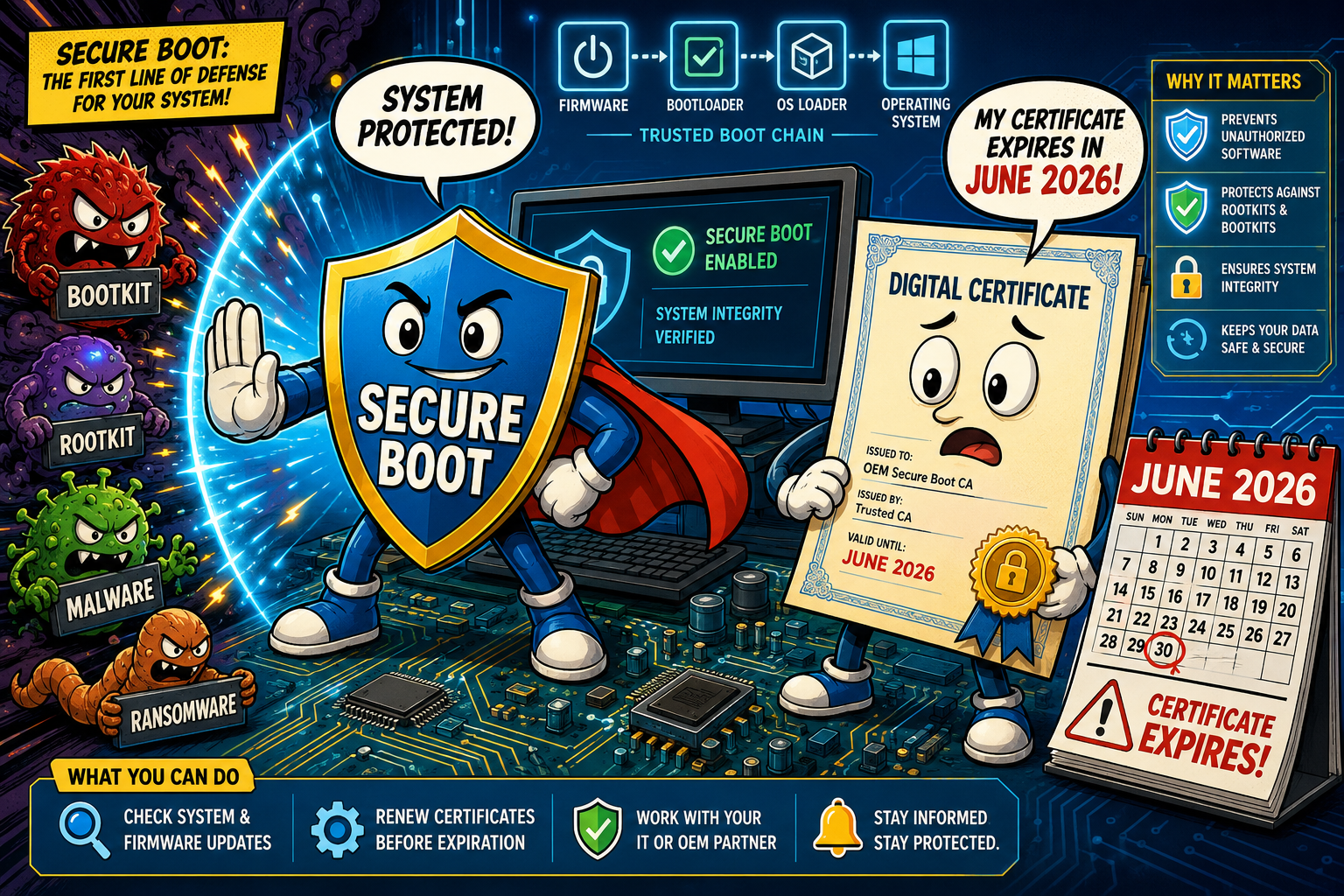

VBNMW_Realist
(23 posts)I say that 1 way to think of it is that "Secure Boot" in practice is really securing Microsoft. Boot-level malware is actually very hard to execute because there are other security measures stopping it on basically every OS and it often requires physical access to the computer in practice. Even though there is a difference between having the old boot keys expire and blocking all future loaders, experts are saying it could be a test.
HP has been quietly offering computers with FreeDOS for a lower price for the last couple months (the price without the Windows license) in all markets, rather than only lower-income markets. FreeDOS is usually used for playing some old games, but here it is used as a placeholder OS that only shows the system works. All PC manufacturers should start shipping machines with Linux or minimal OSes in the event of a Secure Boot lockdown.
Goonch
(5,923 posts)Me too. (Not Linux Mint specifically but Ubuntu which they say is similar because they are both Debian-based.)

ExtraGriz
(536 posts)Getting rid of Windows 10 on my laptop, not even going to try dual boot.... will let you know if the same thing happens to me.

QueerDuck
(2,099 posts)Which flavor of Linux are you installing?
VBNMW_Realist
(23 posts)I installed Ubuntu. Works great. Months later, I decided to start dual-booting Fedora. I use the Ubuntu for work-type stuff and Fedora for more personal things.
It was a bit painful to set up the hibernation partition, but it was worth it.
ExtraGriz
(536 posts)I have Mint on both my desktop PC, both are the 22.x... tried Debian and Red Hat a while ago, but Mint is install and go.
Downloaded the Cinnamon 22.3 already and will install it later today.
.. can't wait to rid myself of Windows, I only kept it for gaming.
QueerDuck
(2,099 posts)One of my favorite Linux world youtubers "The Linux Experiment" is sponsored by tuxedocomputers.com ... so this might be a starting point in the future.
I think you're right that it's anti-competitive. For most people, the path of least resistance will lead directly back to Windows. Ugh.

hunter
(40,937 posts)... that are not burdened with corporate and government spyware. The situation is even worse with smart phones.
Big Brother is watching you.
From the start of the personal computer revolution the power of computers available to consumers increased while prices fell or remained the same. That's not the case anymore. All the latest and greatest computer technology is going into the construction of gigantic data centers. Consumers are left to choose between cloud-centric computers that automatically connect to these huge data centers or they pay very high prices for computers that make it unnecessarily difficult to install alternative operating systems on.