General Discussion
Related: Editorials & Other Articles, Issue Forums, Alliance Forums, Region ForumsThe Real Reason Bosses Want You Back in the Office Full Time (It's Not Productivity)
https://www.nytimes.com/2026/06/22/opinion/office-work-wfh-bosses.htmlThe Real Reason Bosses Want You Back in the Office Full Time (It’s Not Productivity)
June 22, 2026, 5:00 a.m. ET
By Adam Grant, Marissa Shandell and Courtney Elliott
Dr. Grant, a contributing Opinion writer, is an organizational psychologist at the Wharton School of the University of Pennsylvania. Ms. Shandell and Ms. Elliott are Ph.D. candidates there.
When the pandemic came to an end, many people who had been working from home assumed they would be allowed to maintain that habit at least a few days a week. But today in the U.S., a third of companies have forced everyone back to the office full time and have banned remote and hybrid work.
Some leaders say they insist on full-time in-person work because it boosts productivity, despite clear evidence that it does not. Others claim it’s about collaboration, creativity or culture. Our new research reveals that the objection to any work from home is more likely to be driven by something else entirely: ego.
Case by case, there may be good reasons for teams to work together in person. As a general rule, though, it turns out that ordering people back to the office full time is a power and status move. It’s a signature strategy of leaders who exhibit narcissistic qualities. They see any kind of remote work as a threat to their authority and admiration. They want to be worshiped at the office altar.
Over the past six years, we’ve studied why some leaders continue to support remote work, while others resist it. We surveyed thousands of executives, middle managers and frontline supervisors on a host of personality traits. When we later asked them about their stances on hybrid and remote work, their answers didn’t correlate with how much they trusted their employees or how much they loved being around people. The only trait that consistently predicted objections to remote work was narcissism — the tendency to be self-centered and entitled. The higher the opinions of themselves leaders expressed, the more they coveted power and status — and the more they favored return-to-office mandates.
That pattern held for chief executives of Fortune 500 companies. Since we couldn’t directly measure the size of their egos, we measured factors that many previous studies have identified as reliable proxies for narcissism: the sizes of their pay packages, their signatures and their photos in their company reports. (No, the chief executives probably aren’t directly overseeing the page layout, but their underlings have to figure out what will and won’t please the boss.) Commanding outsize compensation and projecting an outsize image sends a message right out of Ron Burgundy’s playbook: I’m kind of a big deal. We found that the higher chief executives scored on this index, the more likely they were to seek power and status by becoming chairmen of their own companies and joining the boards of other companies. These were the chief executives who made the most negative statements about remote and hybrid work during the first two years of the pandemic.
...
 = new reply since forum marked as read
Highlight:
NoneDon't highlight anything
5 newestHighlight 5 most recent replies
= new reply since forum marked as read
Highlight:
NoneDon't highlight anything
5 newestHighlight 5 most recent replies

bucolic_frolic
(56,296 posts)Organizations, corporations, societies run as pyramid structures, you answer to the layer above. Power is exercised.

dem4decades
(14,639 posts)
Orrex
(67,528 posts)
YodaMom2
(242 posts)and hold them captive audience while you bloviate about your “vision” for the company.
True Dough
(27,633 posts)"IS HE DEAD YET???"

sop
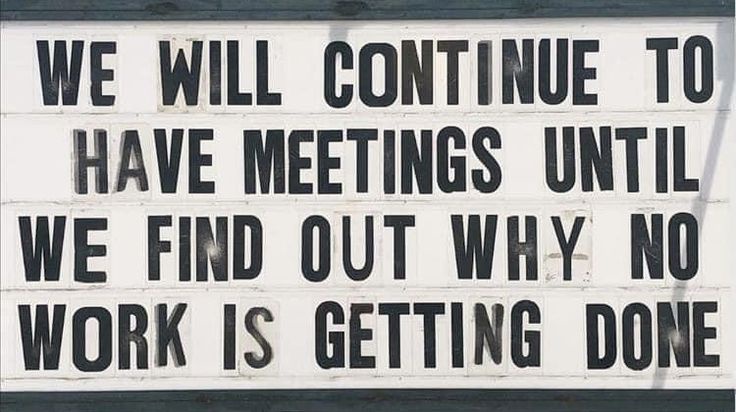
(19,818 posts)Endless and pointless daily meetings, to discuss useless things everyone already knew, motivate unproductive subordinates with bullshit like "work smarter, not harder," pass out nonsensical material no one wanted to read, force them into "breakout groups" to mull over the manager's latest brain storm, all while taking busy people away from their assigned work...so they would be less productive.


in2herbs
(4,649 posts)disconnect.
dave99
(491 posts)
Shipwack
(3,130 posts)True for both situations.
Achieved for children by keeping them at home.
Achieved for adults by keeping them away from home.

ZDU
(1,563 posts)Narcissist feed. Control. Manipulation. Gas-lighting...

ProfessorGAC
(77,656 posts)...that can't be done from home.
Equally clearly, there are functions than can be.
Measuring productivity from data drawn from decades of in-person work would make standards simple to set.
So productivity losses could be easily prevented.
Were there cases of lower productivity caused by work-from-home? Probably.
Is it manageable? Definitely.
I don't buy the ego argument though.
With all the travel my staff & I did, I was managing by remote control most of the time anyway. And, my staff never questioned who was in charge.
Are there crummy managers? Of course. Companies need to start promoting better & the whole issue goes away.
dave99
(491 posts)ProfessorGAC
(77,656 posts)I have no idea how you got that impression.
I had a job that REQUIRED remote managing.
Amongst the 8 of us, there were probably 160 business trips. Somebody, including me, was always somewhere else.
Orrex
(67,528 posts)The very first day that employers were allowed to return to the office, my then-employer demanded that everyone return to the office, for all of the bullshit reasons cited: productivity, collaboration, etc.
COVID proved that companies will happily sacrifice productivity and profitability if it allows them to maintain more rigid control over their employees.

Sequoia
(12,794 posts)As an ex corporate employee of many companies the managers put workers through the grind of useless meetings and impossible goals. Corporate ladders, glass ceilings, etc. Don't call in sick.
Orrex
(67,528 posts)During the height of the pandemic "lockdown," a friend who's a low-level manager was called into the office for a mandatory meeting. Mandatory as in "failure to the meeting in person will be interpreted as your resignation."
The meeting? A Teams meeting, with each participant sitting in their respective office while the quarterly numbers were reviewed.

Oneironaut
(6,372 posts)He was a full-fledged narcissist, as in, he was an incredibly evil person who sought to create conflict for his amusement and had no empathy whatsoever. He did the back to office thing and more, e.g. calling you at night and demanding you answer to answer a simple question of his, just to torture you. The day he got fired (for sexual harassment of course) is probably the best day of my working life so far. It was like Christmas morning as a 5 year old lol.
OMGWTF
(5,276 posts)He fired me in October 2008 (thanks Greenspan and GWB) after 20 years at the same company, with several promotions. The HR person was there and all she had to say about what he did was, "That certainly could have been handled better." To make it worse, as I was filling up my cardboard box with personal things, that mofo was standing by my desk, laughing. I wanted to throw a stapler at his smug stupid face but walked away with my dignity. Getting fired turned out to be the best thing that could have happened. I heard from people in the business that the company has really gone downhill since Jr. took over from his dad. Thankfully, I am retired now and doing whatever the hell I want to every day.
Oneironaut
(6,372 posts)He sounds like a massive, petty asshole. Glad you were the better person!

multigraincracker
(38,293 posts)the employee owned and run business. Everyone is working for the most successful operation and everyone shares in the profit. No need for overpaid CEOs. They are just overhead that can be trimmed.

MichMan
(17,603 posts)Publix Supermarkets is the largest employee owned business in the US with 260,000 employees. Their CEO is Kevin Murphy.
multigraincracker
(38,293 posts)MichMan
(17,603 posts)From what I can tell, that is over 130 times what a typical Publix cashier earns.
DFW
(60,761 posts)I’ve never heard of Publix, but for $1.7 million a year, I think I’d be willing to find out about it.

nuxvomica
(14,375 posts)When my former company went remote, most of the managers who rankled with it argued that they couldn't trust the employees to be working, a kind of paranoid response that may just have been one of the many facets of narcissism. They couldn't see the "plus" sides: wider pool of prospective employees, employees with better work-life balance, and, ultimately, less awkward layoffs.
Easterncedar
(6,648 posts)It was disheartening how dishonest some of them were willing to be.

Pinback
(13,709 posts)rather than their BS-ing skills, it becomes obvious pretty quickly who’s slacking and who’s working.
When I was able to work from home, I was on teams that were planning and executing software projects for a large corp. I could go into an office and collaborate with people in other cities and on other continents, or I could do that from home. Fortunately, most of the time I could work remotely, toward the end of my employment.
There were certainly those who didn’t produce to an acceptable level, and they usually got uninvited to continue at some point (much easier if they’re contractors). There were a few insufferable suck-ups, narcissists, and bullies, but they usually proved to be ineffective in the long run and also didn’t last in most cases.
For me, I was motivated not by loyalty to the soulless corporation I worked for, but by the esprit de corps I had with my teammates and a desire to learn and keep improving. The most mortifying thing for me would have been to let my teammates down and shove work onto them that I should have been taking care of.
Easterncedar
(6,648 posts)Covid wrecked the esprit de corps and the camaraderie that had characterized my office for decades. We were a public employees office that felt we were doing good in the world, and when the pandemic hit we got atomized. Fear and stress played a big role. Some rose to the challenge and some just went right to exploiting the situation. I was not equipped for managing the degree of dishonesty that appeared.

area51
(12,784 posts)
Bristlecone
(11,243 posts)Office space and want to justify the need for those, rather than explaining to the board why those spaces are largely empty.

lostnfound
(17,708 posts)A major cause of declining values was Work-from-home policies. I can imagine that in our world of ‘corporate ecosystems’ — with interlocking board members, alliances, partnerships, and social groups at the top — there might have been a consensus that a performative return to work was needed for a variety of reasons. I saw half-hearted attempts from some companies to appear to comply (hybrid), while others moved to all-in.
Like the push against single-payer health care, or the decision to kill the electric car in the late 1990s, we ‘can’t have nice things’ when it stands in the way of the markets.
An essay by Michael Litwack titled “How a Post-COVID Commercial Real Estate Meltdown Could Trigger the Next Financial Crisis” presented this view: (Search for the link on LinkedIn if you like.)
Banks, Real Estate Investment Trusts (REITs), and insurance companies are just a few of the entities with substantial stakes in CRE. A significant portion of the $20 trillion U.S. CRE market is represented by Equity REITs, which are publicly traded on stock exchanges. Similarly, banks hold about 60% of CRE mortgage debt, excluding multifamily properties, making them particularly vulnerable to the ebbs and flows of CRE prices. The recent surge in CRE loan defaults paints a grim picture for these financial institutions, particularly at a time when the aggregate balance of high-volatility CRE loans (HVCRE) in U.S. banks rose to nearly $37 billion at the end of Q2 2023 from $32 billion in the previous quarter. Interestingly, Goldman Sachs Group Inc, which is the largest HVCRE lender, has reduced its exposure to such loans by over 36% in the quarter.
A domino effect is at play here. As CRE values plummet, the asset value and income potential of REITs take a nosedive, affecting their stock prices and dividends. Banks, heavily invested in CRE through loans and mortgages, face the heat as the risk of loan defaults escalates with falling CRE prices. The scenario becomes grimmer with insurance companies, especially life insurers, who also have considerable exposure to CRE, often in the form of Commercial Mortgage-Backed Securities (CMBS). The declining property values affect the yields on their mortgage investments, especially when defaults and delinquencies are on the rise.
The broader narrative here is the intertwined fate of CRE and capital markets. The recent defaults and bankruptcies are not merely blips on the radar but potential harbingers of a larger financial storm brewing on the horizon. The fragility of the CRE sector, laden with debt and facing a post-COVID reality of diminished demand, is a ticking time bomb. The tremors of this bomb's detonation are likely to reverberate across the capital markets, possibly igniting the next financial crisis.
2) I would add that a desire to (or a mandate to) reinforce authoritarian roles is another big goal influencing most of these companies. The placement of Leonard Leo- approved board members has helped get the corporate world back in lockstep.
3) Lastly, a crisis that destabilizes communities may be another perceived benefit of acclimating workers to a workplace. If s*** hits the fan, companies can circle the wagons when so desired.

chouchou
(3,421 posts)On the other hand, we kind 'a knew that... 

Raftergirl
(1,897 posts)least 3 days a week and now rarely works from home. He has had 4 promotions since and makes a boatload of money. His daily in person interactions with top management, including the CEO, is likely a direct result of his going into the office. He is now firmly in the rank of top management at age 32.
He also get calls all the time from other companies wanting to hire him away.

TexasBushwhacker
(21,354 posts)I like to get to know my coworkers. I like to get out of the house. I've done work from home when I had a broken shoulder and couldn't drive and I didn't like it one bit! I have have a tendency to become a hermit and that's not good!
dave99
(491 posts)Raftergirl
(1,897 posts)when I’m reading this site all I see every single day is how workers are getting screwed, can’t get a raise, let alone promoted, yet they do nothing and are not willing to make changes because they feel like they shouldn’t have to. And it’s always the “bosses” fault.
My kid makes no bones about the fact that he wants to be successful in his career and make a lot of money. And he has worked his ass off to get there.
I couldn’t be prouder of his accomplishments.
alcuno
(8,098 posts)I'm not sure what that narcissism comment was about. If you want to get ahead you have to be out there making contacts and building relationships. It doesn't matter why an employer wants you in the office - they get to make the call. There is much to be said about the treatment of American workers, but I'm with you - this is one complaint that completely disinterests me.

RandomNumbers
(19,302 posts)But in the situation I actually WAS in, going to the office even on a hybrid schedule made NO sense.
I successfully worked the system so I am now locked in at fully remote. My productivity and availability are excellent, and the boss doesn't even ask me to travel anymore.
Different strokes ...

Joinfortmill
(21,894 posts)I had an opportunity to wfm. I was an Individual Contributor. I wasn't a manager, but I performed a complete job, testing retirement plans, which is a federal requirement. My productivity increased, primarily because it was easier to get to my desk. I often worked weekends because I could pour a cup of coffee and, still in my pj's, plop down at my desk. My mood also improved because the corp. environment is a jungle. Meetings were never an issue, we video conferenced. But, some managers think their losing control, so they sabotage it when they can.

Tree Lady
(13,429 posts)All different types of jobs, paralegal, setting up pt appts, and a CPA for large accounting software co.
They all work hard, very serious but enjoy being able to walk in next room a grab a cup of coffee, check on the kids with sitter, save money on gas and eating out and clothes. My daughter says on zoom or video calls she wears a nice blouse with yoga pants and comfy shoes. She's the CPA.
They all love it, after covid my daughters company forced her back and she hated it so found a different better job at home. She works for a Canadian company with ties to DC one. Travels to both places few times a year.

Old Crank
(7,419 posts)That shows his boss he is needed also.

Johonny
(26,835 posts)Only to spend all day logged into Teams meetings, then watching them leave to find another job, but management still worried about declining rates of retention. LOL
MichMan
(17,603 posts)I worked for medium sized manufacturing plants for nearly my entire career. The employees that are running the machines that make widgets can't work from home, so they have to come in every day, as well as those in warehousing, shipping, maintenance and skilled jobs.
It was demoralizing for them when they needed to speak to someone in HR regarding vacation, Payroll about their last check, Quality Control regarding a defect that needed to be reviewed, or IT regarding their workplace computers etc, to find they were all working from home, and not available to help them. Sure they could call and leave a voice mail, but it was quite frustrating to them, especially when they had a limited amount of time during lunch or break to resolve their concerns.
It set up two classes of employees, the ones that had to show up each and every day that actually produced the product that created revenue, and those who were privileged to work from home, creating a lot of resentment. Not good for team morale.

Moostache
(11,346 posts)I manage a team of research chemists and microbiologists. The equipment and laboratory environment cannot be taken home or made portable, to do this job, people simply must be on-site. The compromise that we have reached is to allow personnel 1 day of WFH (work from home) per two week cycle, provided that their on-site assignments are either completed or covered by on-site team members / co-workers.
This system requires that 1) I am in contact with my direct reports and their projects daily and 2) that we establish an environment or trust and comradery that allows people to know they have support when needed. My group loves the arrangement and the flexibility it offers them and productivity has not been harmed at all. My biggest obstacle is the one that is beyond my control at all - salaries and benefits in an inflationary time feels WAAAAAAAAAAAAAAAAAAAY worse than just small COLA raises and an annual bonus should.
I cannot change the corporate compensation model and I cannot do anything more to increase compensation, I just remain honest with each individual and do the best I can to champion them based on the achievements hit during every review period.
Oh, and for those who have bad managers I am sorry, but for those who have good managers they already know the primary role of the manager (and it is largely thankless the closer to manufacturing you drift) - it is you manager's primary duty to run interference and take blame for everything that goes wrong and pass on credit (up AND down the chain) for anything that goes well. Bad managers invert these responsibilities and do not understand the assignment. Do I "work" as hard as my reports? Of course not, but that's the point - my primary responsibility is to maintain their ability to hit targets and make deadlines, to keep things moving smoothly and to provide a single point of contact to explain when things are not smooth. The better you are at this role, the less it appears you have to do to those outside the actual team or project, and the worse you are, the more your team feels the heat.
WE also implemented access to the 9-8-80 working model (4 x [9] hour days weekly [72 hrs]; plus 1 x [8] very other Friday [8 /80 total hrs.]) to marry up to the `1 day a week WFH access. In effect, this makes every weekend a 3-day weekend and allows my team to stretch out their vacation usage and schedule things like doctor's visits and car repairs in a better manner. The one restriction is the WFH day cannot be the Monday after a scheduled Friday off... those absences require use of a day of ETO still.
The bottom line is always, if a business WANTS to treat employees well, its always POSSIBLE... but weak people make weak leaders and they make weak decisions all the time. Sad but true.
intelpug
(171 posts)Boy does that sound familiar, Nothing like finally getting an HR type to finally return your phone message three day's after the fact for something that's almost too late now only to have to talk to this person while listening to a washing machine and barking dog somewhere in their background, Shows how much they really care about doing their jobs helping employees, well,, with anything at all

slightlv
(8,174 posts)I have wondered over the few years I've retired WHAT I could have done or said differently to avoid taking early retirement. I could never come up with anything. I presented evidence of my high productivity while working at home in several different formats; some even trackable by the office's own IT systems.
My coworker and I still collaborated constantly, whether I was at home or in the office. We were the only two responsible for the work we did, so there was no one else to worry about collaborating with. And I swore I'd make it to the office for any administration and or coordination meetings.
Beyond all that, everything I did on my job was done on WiFi. It didn't go to the office's or DoD network; it went directly into Amazon Cloud Services, which hosted our Blackboard. While at home, my wifi was fast and efficient. The one at my DoD office was slow and unreliable; as more often than not, it would be down (along with the rest of the network!).
I didn't ask for all work for home; only a flexible, partial week. I have both lupus and fibromyalgia. Depending on which was hurting me the worse, I'd either not be able to drag myself out of bed, or I'd be in joint pain from feet up to neck. And that doesn't take into account the bathroom effects.
Reading this finally puts the last puzzle piece into place. *Of course* it was narcissistic personality managing it all behind the scenes. Add to that a direct supervisor who was conflict-averse (except with women, of course) and that's the ball of wax right there. The DoD, like so much of military still, is a man's world. Men would regularly come in late, work offsite, or get flexible hours. Women were NOT granted the same leeway, even though we were veterans (although we needed it more). The number of auto-immune diseases in my female coworkers were off the scale, and even the one who got a "terminal" diagnosis couldn't get our dept manager to okay even a hybrid situation for her.
HOW men ever got the status quo image of "manly, strong, stoic, and reasonable" is a wonder to me. So many I've found to be arrogant, bossy, and narcissistic... or just afraid of making waves. I often wonder how these retired military men ever made it through their wars alive!

genxlib
(6,185 posts)Certainly there are some industries where it might be true. And certainly there are some industries where work from home is fine.
I will tell you from 35 years in my industry that it sucks and many of my peers agree. I totally understand why people want to do it but it definitely makes it harder to function in a collaborative environment.
I also think it is bad for any kind of corporate morale because people feel less connected to the companies they work for. I get that there is less personal connection in modern corporate life but to whatever degree it is attempted, this trend has sucked the life further out of it.
Pre-covid, we had a thriving office with 25 people in it and now we have a morgue where we usually have a quarter of that.
I would also say it is dangerous from an employee standpoint to become a nameless/faceless input-output machine. Once you have convinced someone that your presence isn't necessary it is a much shorter leap to outsourcing to overseas or AI.
I know it is an unpopular opinion but I stand by the opinion.

maxsolomon
(39,373 posts)It may be true in some cases and some companies, but it's not simply or solely power moves by Narcissists in management.
RTW is good at our firm. We're not 100%; you can WFH on Fridays and no one really cares if you do Monday too.
Younger staff benefit from in-person collaboration and firm culture. A lot of them are Pandemic kids who missed out on a great deal of IRL experiences.
Plus, I get more shit done when I'm in the office.
genxlib
(6,185 posts)I believe I recall that you are in the Engineering or Consulting field.
I think you are exactly right that IRL makes for much better mentoring and generically absorbing knowledge. I feel like we have gone from broad based experiential learning on the job to a much narrower task oriented learning.
I also get more done when I am in the office. It isn't necessarily that way for everyone but I think it is more broadly true than people want to admit.

forthemiddle
(1,460 posts)I like to say I worked from home before it was cool.
WFH is not for everyone. I was never a manager but I did do some onboarding and system training.
The bad seeds warped the image of the whole work style. There are , literally, full groups on Reddit and other social media sites that brag about having multiple full time jobs and how to get away with it.
There are multiple threads about people asking who works more than 3-4 hours out of their full time jobs, and what they do to fill their free time. There are also threads about getting away with fooling the system monitoring of key strokes, etc.
I am the biggest advocate of WFH, it was a Godsend for me. Having said that, when people want jobs to avoid daycare for infants, or for going to the gym during the middle of the day, it ruins it for everyone else.
When you are employed to work for 8 hours a day, 40 hours a week, that’s what you should be doing! That doesn’t mean you can’t throw in a load of laundry or start dinner on your break but you are being paid to work. Don’t ruin it for everyone else. If you have enough time left over after your assignment let your managers know don’t just assume it’s “your free time “.
MichMan
(17,603 posts)People working in retail, manufacturing widgets, restaurant staff, nurses, mail carriers, those repairing air conditioners, plumbers, auto mechanics, dry cleaners, construction, landscapers, firefighters, and a myriad of other blue collar working class jobs just don't have the option of working from home.
LogDog75
(1,460 posts)A lot of companies were operating under the traditional structure of employees coming to a physical location for work. Covid showed that many jobs needn't have a common physical location for all employees to work at. Work from home has shown people can do as much or more work than in the office.
For upper/middle managers who were used to the traditional office setting, employees working remotely was a shock to their traditional values. Instead of adapting to the changing work environment, they are forcing employees back to the office so the managers can feel comfortable if a traditional setting. Managers, by their title, manage people, money, and resources and to do that they need to be able to listen to their employees and adapt their style of management to meet changes in work environment. Recognizing which method of work, in office or remotely, produces the best outcomes is a major function of managers.
waterwatcher123
(563 posts)My experience in government is that mid-level managers are obsessed with controlling people. They have no role other than to take credit for the work of employees while simultaneously making sure no line level employees were able to communicate directly with upper management and outside decision makers.
Wicked Blue
(9,080 posts)Also those who worked for federal contractors.

OAITW r.2.0
(32,949 posts)drove to work to engage with team manufacturing meetings. Spent a lot of time working China time in the 90;s. This saved structural day delays on communicating necessary information. That meant sleeping in a lot of mornings and traveling to work for a few hours in the PM to the office, didn't make a lot of sense. My boss was happy with my workflow.

underpants
(197,762 posts)Having to be “in the office” just changes the mood.
I avoided corporate catch phrases.
I get vastly more done at home than at work. I can’t scan and my Adobe isn’t able to add to documents.
When you have to go in you are unsettled.
Pinback
(13,709 posts)there are a lot of variables.
I know many younger workers benefit from the mentorship opportunities of in-person interactions with seasoned colleagues, which are harder to come by via remote work. And there can be morale benefits from face-to-face communication, as long as your co-workers are good teammates and sane non-assholes.
I spent many years driving miles and miles to sit at a desk in buildings near the neighborhoods where top management lived. (Funny how that works.) In the last few years of my employment, I was on an IT team that was trusted enough to work remotely, which was such a blessing. Of course, it came with downsides, such as often working early, late, and on weekends. But our project rhythms were cyclical, so there were slack periods where I could take a long lunch break, work a shorter day now and then, etc.
But I can definitely confirm the ego part of the phenomenon. One of the Very Important Senior Executives at the corporation where I worked in my late-stage career came to our fair city to address a Town Hall meeting at our regional HQ. Most of us watched the video feed while multitasking, because we were as usual behind the 8-ball on deadlines. Well, we weren’t the only ones, as it turned out, and Mr. Big Shot spoke to a one-third-full auditorium. A bit embarrassing for him, it seems. Oops!
After that day, the edict came down from On High that we would all be expected to drag our butts into a local office an average of three days a week. Now, mind you, my job consisted of working with people around the U.S.A. and in different countries around the world, sometimes in vastly different time zones. (Calls with team members in California, The Netherlands, east coast U.S.A. and India were fun to schedule!)
So on my in-office days, I’d bring my laptop to a drop-in work space in a building in which none of my co-workers were present, so I could get credit for “being in the office,” where I would collaborate with people around the country and the globe.
All to assuage the fragile ego of a VP! 
paulkienitz
(1,557 posts)Companies that own buildings will not want those buildings to get underused and lose value.

Figarosmom
(14,585 posts)When you do it from home and they can't see you working.

Jilly_in_VA
(14,739 posts)He's worked from home almost as long as I've known him. He's a computer systems architect and has worked for a couple of different companies. He worked for one based in CA and got furloughed, then laid off, during Covid. That company,, sadly, has gone straight to hell following the death in 2020 of its CEO of non-Covid related causes. After that, a discussion with a former co-worker at, of all things, another former co-worker's memorial service, resulted in his hiring by a company which was then just past startup status and has since grown rapidly.

OldBaldy1701E
(11,782 posts)This has been well known since the day that corporate behavior started.
It has always been about ego. Management was and is a creation that the entire world has regretted very since. Tin pot dictators with overblown egos and minimal ability. 'The Peter Principle' in practice.
As far as owners go, it seems that with great power comes great insecurity. I find that pretty wild, as they are supposed to be 'at the top' but act like they are 'living in the trenches'. So, they take it out on their employees because those same employees have no ability to just walk away without endangering their incomes. That is part of our desired socioeconomic life these days, and we don't seem interested in changing a bit of it.
Face it, a sizable part of office culture is playing 'court games'. It is a complete waste of time and ability and exists only to fuel those weak-willed idiots who find themselves with a little power and then have to figure out a way to justify it, since they have no real ability and probably got the position due to... metaphorical fellatio, shall we say? (And, maybe sometimes not so metaphorical?)
It has always been about their egos.