General Discussion
Related: Editorials & Other Articles, Issue Forums, Alliance Forums, Region Forums
'The Moral Property of Women': Mifepristone, Fibroids and the Stakes of Suppressed Science
(AND THE MISOGYNIST, PATRIARCHAL, CHRISTOFASCIST, THEOCRATIC, WOMAN-HATING WAR ON WOMEN CONTINUES APACE)
‘The Moral Property of Women’: Mifepristone, Fibroids and the Stakes of Suppressed Science
PUBLISHED 1/20/2026 by Carrie N. Baker
Mifepristone is more than just an abortion pill. From fibroids to miscarriage care, its medical promise has been sacrificed to antiabortion politics.
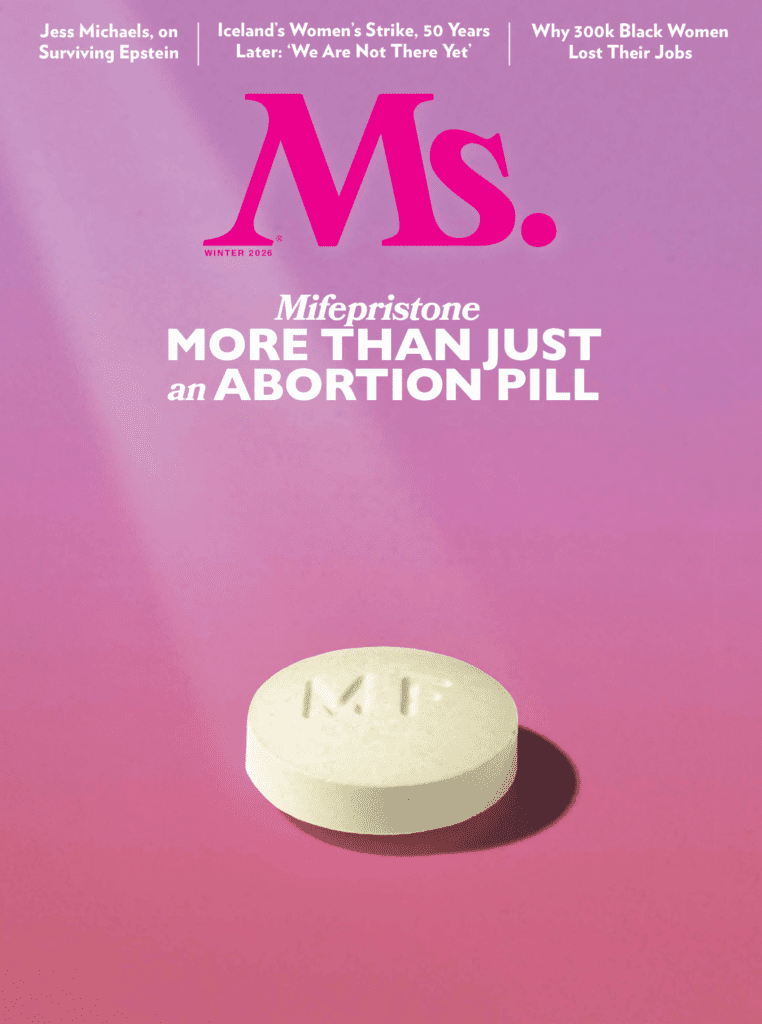
This is Part 1 of 3 in a new series, “The Moral Property of Women: How Antiabortion Politics Are Withholding Medical Care,” a serialized version of the Winter 2026 print feature article. Part 2 examines how mifepristone could transform treatment for endometriosis, cancer and other chronic illnesses that disproportionately affect women. Part 3 explores the drug’s promise as a safer, non-hormonal form of contraception—and the political forces working to keep it out of reach.
On Sept. 28, 2025, activists nationwide commemorated the 25th anniversary of the U.S. Food and Drug Administration’s approval of mifepristone for early termination of pregnancy. Beyond abortion care, the FDA has also approved mifepristone for treatment of Cushing’s disease (a hormonal disorder) and has granted “compassionate use” to treat meningioma (a benign brain tumor) and other serious or immediately life-threatening conditions. Doctors widely prescribe mifepristone off-label to manage miscarriage, treat ectopic pregnancies, support cervical dilation during childbirth and induce labor.
But the drug has many other uses, especially for women. Mifepristone functions as a synthetic hormone that adheres to progesterone receptors in the body, blocking the hormone’s action and preventing the negative effects it can sometimes have, such as when it stimulates the growth of uterine fibroids or certain cancer cells. Mifepristone also blocks glucocorticoid receptors, meaning hormones such as cortisol cannot attach and suppress the immune system, increase blood glucose levels or cause stress leading to depression.As a result, mifepristone has shown potential in treating a striking range of ailments, including fibroids, ovarian and breast cancer, depression, endometriosis, Gulf War Illness and potentially even symptoms of other autoimmune diseases, such as rheumatoid arthritis and lupus. Research also suggests that mifepristone may help prevent some forms of breast cancer and can serve as an effective weekly contraceptive without the side effects of hormonal birth control. Despite mifepristone’s broad medical promise, its development has been repeatedly stymied by abortion opponents who fear wider availability would weaken their attempts to suppress abortion access. Antiabortion politics have blocked or delayed the development of mifepristone for these other uses, leaving women in needless pain and subject to invasive and unnecessary surgical procedures such as hysterectomies.
Fibroids
Mifepin China recently synthesized all available studies on the use of mifepristone to treat fibroids. In a meta-analysis of 18 randomized controlled trials involving 2,066 patients, researchers found statistically significant support for the use of mifepristone to treat fibroids. Dr. Yefang Huang of Chengdu University in China told Ms. that mifepristone “effectively reduces fibroid volume, alleviates symptoms such as excessive menstrual bleeding and pelvic pain, and is generally well tolerated.” With small daily doses of mifepristone, patients experienced significant pain relief, allowing them to resume daily activities more comfortably. Many patients were able to avoid surgical intervention, including hysterectomies—an invasive and painful surgery that carries risks of complications, requires a significant recovery period and can lead to early menopause. Huang notes that current surgical and medical treatments for fibroids are associated with hot flashes, night sweats and vaginal dryness, and are typically more costly. “Mifepristone presents advantages such as noninvasiveness, fewer side effects and lower cost. Patients generally demonstrate better overall tolerability and quality of life during mifepristone treatment.” China’s National Medical Products Administration approved mifepristone for the treatment of uterine fibroids in 2014. In China today, a three-month regimen of 10 milligrams per day is the approved protocol for treating fibroids.
Meanwhile, American women still do not have access to this very effective nonsurgical treatment.
https://msmagazine.com/2026/01/20/the-moral-property-of-women-mifepristone-fibroids-and-the-stakes-of-suppressed-science/
